Choosing between a string inverter and a hybrid inverter with battery storage involves several practical considerations, including system cost, energy independence goals, roof configuration, and local utility policies.
A string inverter converts DC electricity from solar panels into usable AC electricity for your home. It is a straightforward, well-established technology with lower upfront costs and a simpler installation process. However, it does not inherently support battery storage, meaning excess solar energy is typically exported to the grid rather than stored for later use.
A hybrid inverter combines the functions of a standard solar inverter with a battery charge controller, allowing the system to store excess energy for use during the evening, during outages, or during periods of high grid electricity rates. This added functionality comes at a higher initial cost and involves greater installation complexity.
The decision between the two depends on measurable factors. Homeowners in areas with reliable grid service and favorable net metering policies may find that a string inverter offers an adequate return on investment.
Those in areas with frequent outages, time-of-use electricity pricing, or limited net metering compensation may benefit more from a hybrid system with storage.
Roof layout also affects the comparison. String inverters perform best when panels are uniformly oriented and unshaded. Hybrid systems are often paired with microinverters or DC optimizers to address shading issues, which adds further cost.
Evaluating utility rate structures, local incentives, outage frequency, and long-term energy goals provides a more reliable basis for this decision than general recommendations alone.
Key Takeaways
String inverters convert solar DC electricity into AC power but lack the ability to operate during grid outages, meaning solar energy cannot be utilized when the grid goes down. Hybrid inverters, by contrast, combine battery management and solar conversion into a single unit, allowing for energy storage and a degree of independence from the grid.
Shading presents a meaningful performance challenge for string inverters, as reduced sunlight on any one panel can decrease output across the entire string. Hybrid inverters equipped with multiple maximum power point tracking (MPPT) channels are better positioned to limit these losses by optimizing each input independently.
From a cost perspective, string inverters carry a lower initial price point. However, retrofitting a string inverter system with battery storage requires additional components, which can offset the upfront savings and raise the total system cost over time. Hybrid inverters involve higher initial expenditure but are designed to accommodate battery integration without significant additional hardware.
Hybrid inverters are generally more appropriate for homeowners who place value on energy independence, wish to reduce costs through time-of-use rate management, or intend to incorporate battery storage in the future. String inverters remain a practical and cost-effective option for grid-tied systems where backup power and storage are not priorities.
How String Inverters and Hybrid Inverters Work Differently
String inverters and hybrid inverters both convert DC power from solar panels into AC power for household use, but they differ in how they manage energy. String inverters connect multiple panels in series, which means reduced output from one panel — due to shading or debris — affects the performance of the entire string. Battery integration with string inverters requires additional components, such as a separate charge controller or battery inverter, adding complexity and cost to the system.
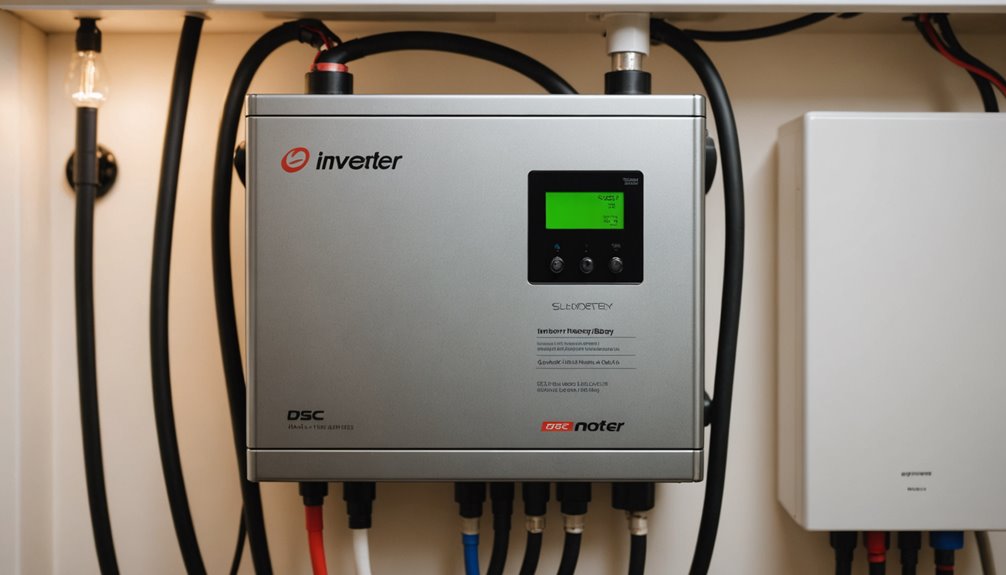
Hybrid inverters consolidate solar and battery storage management into a single unit, handling DC-to-AC conversion for both power sources without requiring separate equipment. Many hybrid inverters also include maximum power point tracking (MPPT) technology, which adjusts output to maintain efficiency under changing conditions such as partial shading or fluctuating sunlight. This integrated design can reduce installation complexity and may offer greater flexibility for systems where battery storage is planned as a current or future component.
The choice between the two depends on factors such as current budget, whether battery backup is a priority, and long-term energy goals. String inverters tend to have lower upfront costs and are suitable for installations with consistent sun exposure and no battery storage requirements. Hybrid inverters carry higher initial costs but offer a more consolidated solution for those seeking combined solar and storage functionality. For Connecticut homeowners with solar panels, pairing a hybrid inverter with battery storage can increase solar self-consumption rates from around 30% to over 80%, significantly reducing dependence on grid power.
String Inverter vs. Hybrid Inverter: Side-by-Side Breakdown
String inverters and hybrid inverters differ in several key technical and financial aspects. String inverters convert DC electricity from solar panels into usable AC electricity without built-in battery integration. They carry lower upfront costs, making them a practical option for installations where battery storage is not an immediate requirement. However, their design limits flexibility in energy management, as adding battery storage later typically requires additional equipment and cost.
Hybrid inverters incorporate both solar conversion and battery management functions within a single unit. The initial cost is higher, but this reflects the added capability of managing energy storage directly. This integration can reduce the complexity of system expansion and may lower the overall cost of adding battery storage compared to retrofitting a string inverter system.
In conditions where partial shading affects solar panels, string inverters tend to experience greater output losses because the performance of all panels in a string is limited by the weakest-performing unit. Hybrid inverters, often paired with optimizers or microinverter-like functionality, can reduce this impact in some configurations, though this varies by product.
For long-term energy independence or grid resiliency, hybrid inverters offer a more scalable solution. For straightforward solar installations without current plans for battery storage, string inverters remain a cost-effective and technically sound choice. The appropriate selection depends on the specific energy goals, budget, and site conditions of each installation.
Where String Inverters Fall Short Without Battery Storage
String inverters without battery storage present several operational limitations worth understanding. Since these systems depend entirely on real-time solar generation, any power produced must either be used immediately or exported to the grid. This leaves households without an energy reserve during periods of low generation or high demand.
From a performance standpoint, string inverters are particularly sensitive to shading. Because panels are wired in series, reduced output from a single shaded panel can lower the performance of the entire string, making system placement and environmental conditions more consequential.
Grid outages present another practical limitation. Without a battery buffer, string inverters are designed to shut down during outages for safety reasons, meaning solar generation cannot power the home even when sunlight is available.
Energy management is also more constrained. Without storage, there is no mechanism to shift energy consumption away from high-cost peak periods or to draw from stored solar power after sunlight hours. Consumption patterns must align with generation patterns for the system to be most effective.
Finally, retrofitting battery storage to an existing string inverter system typically requires additional components and, in some cases, a full inverter replacement. This introduces incremental costs and installation complexity that would not apply to a system designed with storage integration from the outset.
What Makes Hybrid Inverters Better for Home Battery Systems
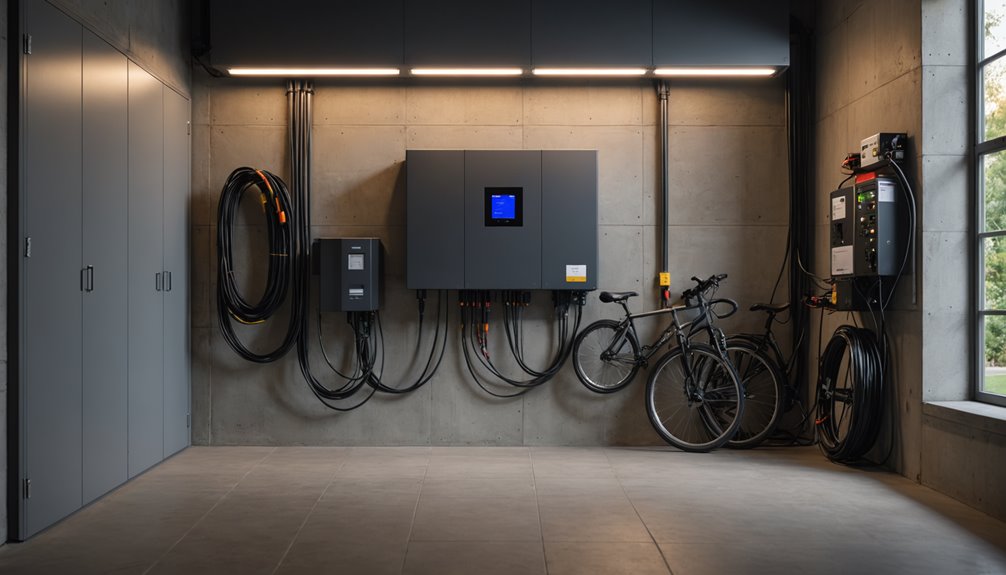
Hybrid inverters integrate battery management functionality directly into the unit, eliminating the need for separate battery inverters or charge controllers required in standard string inverter configurations. This consolidated design allows solar energy to be stored without additional hardware components.
These systems include energy management software that coordinates solar generation with battery charging and discharging cycles. This allows stored energy to be used during grid outages or during periods when utility rates are at their highest, depending on how the system is programmed.
Multiple maximum power point tracking channels allow the inverter to independently optimize output from different panel arrays, which can reduce losses caused by partial shading or panels oriented in different directions.
The initial purchase price of a hybrid inverter is generally higher than a comparable string inverter. However, when factoring in the cost of additional components needed to add battery storage to a string-only system, the total installation cost difference narrows considerably. Reduced grid consumption can offset the price difference over time, though actual savings depend on local electricity rates, usage patterns, and solar resource availability.
Most hybrid inverter platforms support the addition of battery modules after initial installation. This allows homeowners to expand storage capacity incrementally rather than sizing the full system upfront, provided the inverter model supports the additional capacity within its technical specifications.
Which Inverter Fits Your Budget, Roof, and Storage Plans?
Selecting the appropriate inverter type depends on three key considerations: upfront cost, roof configuration, and battery storage requirements.
String inverters carry lower initial costs and perform adequately when roof panels receive consistent, unobstructed sunlight throughout the day. Their limitations become apparent in two areas: performance drops when shading affects even a portion of the array, and retrofitting battery storage requires additional components and cost.
Hybrid inverters have higher upfront costs but include built-in battery management capabilities, allowing for straightforward storage integration without additional hardware. They also handle shading conditions more effectively than standard string inverters.
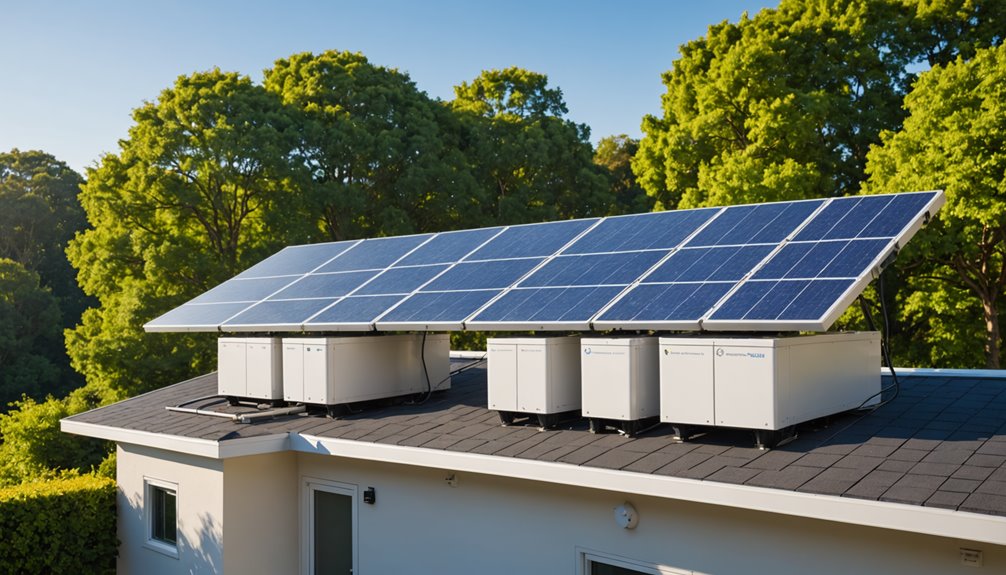
The decision between the two types follows a practical assessment. A roof with uniform solar exposure and no current plans for battery storage makes a string inverter a cost-effective option. A roof with partial shading, or a household intending to add battery storage, would benefit more from a hybrid inverter given its technical capabilities and long-term compatibility.
Neither option is universally superior. The appropriate choice depends on the specific conditions of the installation site and the homeowner’s energy objectives.
Conclusion
Selecting between a string inverter and a hybrid inverter requires consideration of several practical factors, including budget constraints, roof configuration, and anticipated energy requirements.
A hybrid inverter is the more suitable option for those intending to incorporate battery storage, as it is designed to manage both solar generation and battery charging within a single system. It also offers greater flexibility for homeowners seeking to reduce reliance on the grid over time.
A string inverter, by contrast, remains a cost-effective solution for straightforward installations where shading is not a significant issue and battery storage is not a current or planned requirement. Its lower upfront cost makes it a practical choice for those with more immediate budget considerations.
Ultimately, the appropriate inverter type is determined by the specific technical and financial circumstances of the installation rather than a universal preference for one system over the other.