
Selecting the appropriate battery capacity for a solar energy system requires careful evaluation of several measurable variables. An undersized battery bank will fail to meet energy demands during periods of low solar generation or grid outages, while an oversized system results in unnecessary capital expenditure without proportional benefit.
The core factors that determine the correct capacity include daily energy consumption, the number of desired backup days, the depth of discharge rating of the chosen battery chemistry, and the efficiency losses inherent in the system.
Daily energy consumption, measured in kilowatt-hours, can be derived from utility bills or by totaling the wattage and operating hours of individual household loads. This figure, combined with the intended days of autonomy, establishes the baseline storage requirement before accounting for system losses.
Battery chemistry plays a significant role in usable capacity. Lithium iron phosphate batteries typically allow for 80 to 95 percent depth of discharge, while lead-acid batteries are generally limited to 50 percent to preserve cycle life. A system requiring 20 kWh of usable storage would therefore need a 25 kWh lithium battery bank or a 40 kWh lead-acid bank to deliver the same functional output.
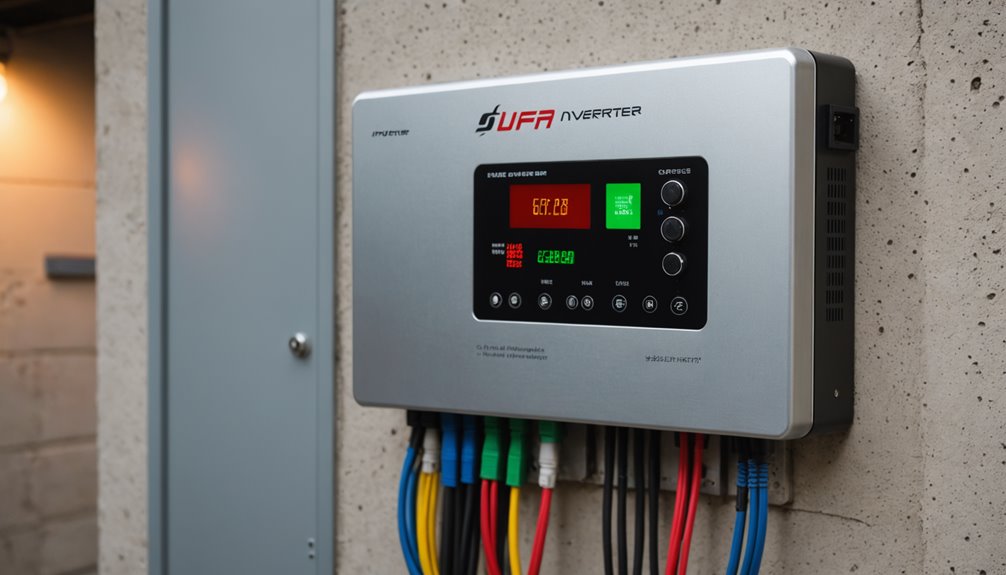
Inverter and charging inefficiencies, typically ranging from 5 to 15 percent, must also be factored into the final capacity calculation.
Applying these variables systematically produces a sizing estimate grounded in the specific energy profile of the installation rather than generalized rules of thumb.
Key Takeaways
- Daily energy consumption, typically derived from utility bills, serves as the foundational metric for determining baseline battery capacity requirements.
- Battery chemistry determines usable storage capacity: lithium-ion batteries permit up to 80% depth of discharge, whereas lead-acid batteries are limited to 50-60%, a difference that has direct implications for system sizing.
- Required battery capacity can be calculated using the following formula: total energy consumption divided by the depth of discharge rate, multiplied by the number of desired autonomy days.
- Operating temperatures influence battery performance. Cold conditions can reduce effective capacity by 10-40%, a factor that warrants increasing total storage capacity to maintain consistent system reliability.
- Inverters and charge controllers introduce efficiency losses in the range of 10-20%, and these losses must be factored into the final battery capacity calculation to avoid undersizing the system.
Why Getting Solar Battery Capacity Wrong Costs You
Incorrectly sizing a solar battery system carries tangible financial and operational consequences. An undersized battery bank fails to provide adequate backup power during grid outages, resulting in increased reliance on grid electricity and the associated costs. Insufficient battery capacity can also lead to practical problems, including food spoilage and gaps in security system operation when daily energy demands exceed available storage.
Oversizing a battery system presents a different set of problems. The higher upfront capital costs may not be recovered through energy savings, and larger systems can introduce maintenance complexity without proportional benefit.
Depth of discharge is a critical factor that is frequently overlooked. Regularly drawing a battery below its recommended DoD threshold accelerates electrochemical degradation, reducing usable capacity over time and shortening the overall lifespan of the system. This leads to earlier replacement costs than projected at the time of installation.
To maintain system performance and cost-effectiveness, selecting energy-efficient appliances reduces the baseline load the battery must support. Periodic monitoring of energy consumption patterns and system output allows for informed adjustments as household needs change. Recalibrating the system based on actual usage data, rather than initial estimates, helps ensure that capacity remains appropriately matched to demand over the system’s operational life. For solar households, properly matched battery capacity can increase solar self-consumption rates from around 30% to over 80%, significantly reducing dependence on grid-supplied electricity.
Key Factors That Determine How Many Batteries You Need
Sizing a battery bank depends on several interconnected variables. Daily energy consumption establishes the baseline requirement, while solar system output and local peak sunlight hours determine how much energy is actually captured and available for storage. Battery specifications also factor into the calculation, particularly usable capacity and depth of discharge (DoD). Lithium batteries, for example, typically support an 80% DoD, which affects how much of a battery’s total capacity can be used without reducing its lifespan. The intended application matters as well — whole-home backup requires substantially more storage capacity than a system designed to power only essential loads. Accounting for each of these variables produces a more accurate battery count and reduces the risk of under- or over-sizing the system.
How to Calculate Your Daily Solar Battery Capacity
Calculating daily solar battery capacity requires accounting for several measurable variables. Begin by determining your average daily energy consumption in kilowatt-hours (kWh), which can be sourced from utility bills over a representative period.
The core formula involves dividing total daily energy consumption by the product of your depth of discharge (DoD) and the number of desired autonomy days. DoD is a technical specification defined by battery chemistry: lithium-ion batteries support a DoD of approximately 80%, while lead-acid batteries operate at lower thresholds, typically between 50% and 60%. Exceeding these limits reduces battery lifespan.
Climate conditions also factor into the calculation. In cold environments, battery efficiency decreases measurably, and system sizing should account for a capacity reduction of up to 40%, depending on average low temperatures and the specific battery chemistry in use.
Once you have calculated the total required storage capacity, divide that figure by the usable capacity of your selected battery unit to determine the number of batteries needed. Usable capacity differs from the rated capacity listed by manufacturers, as it reflects the actual energy available within the recommended DoD range.
Each variable in this calculation — consumption rate, DoD, autonomy days, temperature derating, and per-unit usable capacity — carries a direct numerical impact on the final result. Accurate inputs at each stage produce a more reliable battery bank specification for a solar energy system.
How Battery Chemistry Changes Your Capacity Calculation
Battery chemistry is a primary factor in determining usable capacity and influences several variables in the sizing process. Lithium-ion batteries support an 80% depth of discharge (DoD), while lead-acid batteries are generally limited to 50% DoD. This difference means a lead-acid system requires a proportionally larger battery bank to deliver equivalent usable energy.
Round-trip efficiency also differs between the two chemistries. Lithium-ion typically achieves approximately 95% round-trip efficiency, whereas lead-acid operates at lower efficiency levels, resulting in greater energy loss during charge and discharge cycles. This loss must be accounted for when calculating the total capacity needed to meet a given load.
Cycle life is another relevant variable. Lithium-ion batteries commonly reach 5,000 cycles, compared to approximately 1,500 cycles for lead-acid batteries under similar conditions. Over time, this affects replacement frequency and the overall cost of ownership, which should be considered alongside the initial system cost.
When sizing a solar energy system, these chemistry-specific characteristics, including DoD, efficiency, and cycle life, should each be incorporated into the capacity calculation to arrive at accurate and reliable results.
How Depth of Discharge and Temperature Affect Your Sizing
Depth of discharge and temperature are two variables that directly influence battery system sizing decisions.
Depth of discharge refers to the percentage of stored energy that can be drawn from a battery before recharging is required. Lithium-ion batteries generally support a DoD of around 80%, meaning a system requiring 10 kWh of usable energy would need a total installed capacity of approximately 12.5 kWh to operate within safe discharge limits.
Temperature affects battery performance by altering the chemical processes within the cells. In cold conditions, capacity can decrease by 10% to 40% depending on the severity of the temperature drop and the battery chemistry involved. To compensate for a 20% reduction in cold-weather performance, the base capacity requirement should be multiplied by a factor of 1.2.
Accounting for both depth of discharge and temperature when sizing a battery system helps ensure that the installed capacity aligns with actual energy demands across varying operating conditions. Failing to incorporate these factors into the sizing calculation can result in a system that underperforms during periods of low temperature or falls short of energy requirements when batteries are not discharged beyond their recommended limits.
How to Size a Solar Battery Bank for Off-Grid Systems
Sizing a solar battery bank for an off-grid system requires calculating daily energy consumption in kilowatt-hours, either by reviewing utility bills or by cataloging individual appliance loads and their hours of use. The desired days of autonomy—the number of consecutive days the system must operate without solar input—should then be determined based on local weather patterns and system criticality. Multiplying daily consumption by the days of autonomy establishes the baseline energy requirement.
From this figure, the required battery capacity is calculated by dividing total energy consumption by the battery’s usable depth of discharge (DoD). For example, a lead-acid battery with a recommended DoD of 50% requires twice the nominal capacity compared to a lithium iron phosphate battery with an 80–90% usable DoD.
Temperature is a significant factor in battery performance. At low temperatures, battery capacity can decrease substantially, and in climates where temperatures regularly fall below freezing, increasing total storage capacity by 20–40% is a practical measure to maintain reliable system output. Elevated temperatures can also accelerate battery degradation, affecting long-term capacity.
Additional considerations include inverter efficiency losses, charge controller efficiency, and wiring losses, which collectively can reduce system efficiency by 10–20%. These losses should be factored into the final capacity calculation to prevent undersizing. Selecting a battery bank without accounting for these variables can result in insufficient power delivery during periods of high demand or reduced solar generation.
How to Right-Size Your Solar Battery System on Any Budget
Right-sizing a solar battery system begins with accurately calculating daily energy consumption in kilowatt-hours (kWh). This can be done by reviewing recent utility bills or by summing each appliance’s wattage multiplied by its average daily hours of use. Once daily consumption is established, the required battery storage capacity can be determined using the following formula: battery storage capacity = total energy ÷ (depth of discharge × days of autonomy).
Depth of discharge (DoD) is a key variable in this calculation. Lithium-ion batteries typically support a DoD of around 80%, meaning 80% of their total capacity can be used before recharging is necessary. Lead-acid batteries operate at a lower DoD, generally between 50% and 60%, which reduces their effective usable capacity relative to their rated storage.
Additional factors should be accounted for when finalizing system size. Peak demand periods, seasonal variations in sunlight availability, and reduced battery performance in cold temperatures can all affect real-world capacity. To compensate, it is generally advisable to size the battery bank slightly above the calculated minimum requirement.
When comparing battery options across different budget levels, usable capacity rather than total rated capacity provides a more accurate basis for comparison. Cycle count, which indicates how many charge-discharge cycles a battery can complete before significant degradation occurs, is another practical metric for evaluating long-term value. Balancing these technical specifications against cost constraints allows for an informed and practical system design.
Conclusion
Sizing a solar battery system accurately requires accounting for several key variables: daily energy consumption, depth of discharge limits, operating temperature, and battery chemistry. Each factor directly influences the usable capacity of a battery bank and, consequently, whether a system will meet its intended load requirements. Overlooking or miscalculating any of these elements can result in either an undersized system that fails to cover demand or an oversized one that represents unnecessary expenditure. Applying precise calculations to each variable produces a system specification grounded in actual performance data rather than approximation.