
Selecting an incompatible inverter or battery can result in financial loss and unreliable power supply during outages.
Multiple options exist in the market, each with specific performance characteristics and limitations.
Understanding your home’s actual power requirements is a necessary first step before evaluating any products or making purchasing decisions.
Key Takeaways
Determining the appropriate inverter and battery combination requires a systematic evaluation of household energy demands and component specifications.
The first step is calculating total daily load by cataloguing each appliance’s wattage and multiplying it by the number of hours it operates daily. The inverter’s capacity should be rated at a minimum of 20% above the calculated total to accommodate real-world variability and prevent overloading.
Inverter type selection depends on the nature of connected appliances. Pure sine wave inverters produce output that closely matches grid-supplied electricity, making them suitable for sensitive electronics and motor-driven devices such as refrigerators and air conditioners. Modified sine wave inverters function adequately for basic resistive loads but may cause operational issues or increased heat generation in more complex equipment.
Battery technology involves a trade-off between initial expenditure and long-term performance. Lead-acid batteries carry lower purchase costs but are limited in their usable depth of discharge, typically around 50%. Lithium-ion batteries support deeper discharge cycles, often up to 80–90%, and demonstrate a lower cost-per-cycle over their operational lifespan despite higher upfront pricing.
Inverter VA ratings must align with battery bank capacity, while accounting for inverter efficiency, which generally falls between 85% and 95%. Appliance surge requirements at startup must also factor into this calculation, as motors and compressors draw significantly higher current momentarily than their rated running wattage.
Undersizing either the inverter or the battery bank produces measurable negative consequences, including frequent system trips, shortened backup duration, and accelerated degradation of components due to sustained operation near or beyond rated limits.
Which Appliances Should Your Backup System Actually Cover?
Determining which appliances to include in a backup power system requires a practical assessment of necessity and energy consumption. Essential loads typically include refrigeration, lighting, and basic ventilation, as these directly affect food preservation, safety, and comfort during outages.
Calculating total power requirements begins with identifying each appliance’s wattage. A standard refrigerator operates between 150 and 200 watts, while LED lighting draws approximately 10 to 15 watts per bulb. These figures represent running wattage only. Startup or surge wattage must also be accounted for, particularly with motor-driven appliances like refrigerators, which can draw two to three times their running wattage during initial startup. This factor directly influences the minimum inverter capacity required.
Battery capacity must be sized to cover total daily energy consumption, measured in watt-hours, to prevent the system from depleting before power is restored. Undersizing battery capacity relative to actual consumption is a common cause of backup system failure during extended outages.
Selecting energy-efficient appliances reduces overall demand on both the inverter and battery bank. Lower consumption rates extend the system’s operational duration without requiring additional battery storage. This relationship between appliance efficiency and system capacity is a practical consideration when designing or expanding a backup power setup.
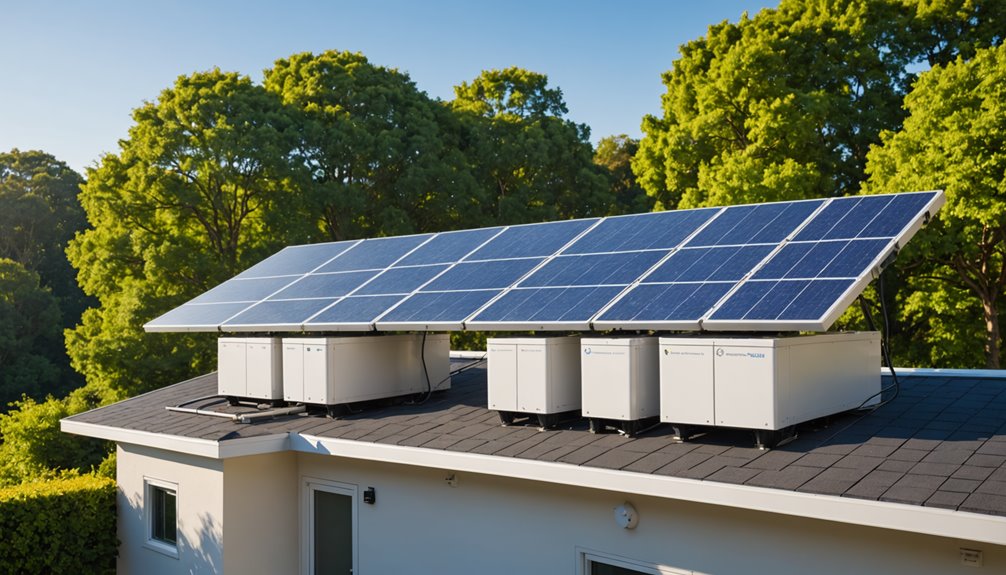
Non-essential high-draw appliances, such as electric water heaters or air conditioning units, are generally excluded from backup coverage unless the system is specifically sized to accommodate them. For solar-equipped homes, pairing a well-sized battery with existing panels can raise solar self-consumption rates from around 30 percent to over 80 percent, significantly reducing dependence on grid power during and beyond outage periods.
How to Calculate Your Total Load Before Buying Anything
Calculating your total electrical load before purchasing equipment helps ensure you select a system that matches your actual power requirements. Begin by listing every appliance you intend to power. For each appliance, multiply its wattage by the number of hours it will operate daily to determine its watt-hour consumption. Add these figures together to establish your total daily energy demand, then divide by 1,000 to express that figure in kilowatt-hours.
When selecting an inverter and battery combination, the inverter’s rated output should cover your total load with an additional 20% capacity to accommodate surge power drawn by motors and compressors at startup. An undersized inverter may fail under peak demand, while an oversized system results in unnecessary expense and inefficiency. Matching system capacity to verified load calculations produces a reliable setup that sustains essential appliances during outages without excess cost.
Inverter Types and Which One Your Home Actually Needs
Selecting the appropriate inverter type depends on the nature of the electrical loads in a household. Square wave inverters are limited in application and are generally suitable only for basic resistive loads. Modified sine wave inverters offer broader compatibility at a lower cost, making them a practical option for many common household devices.
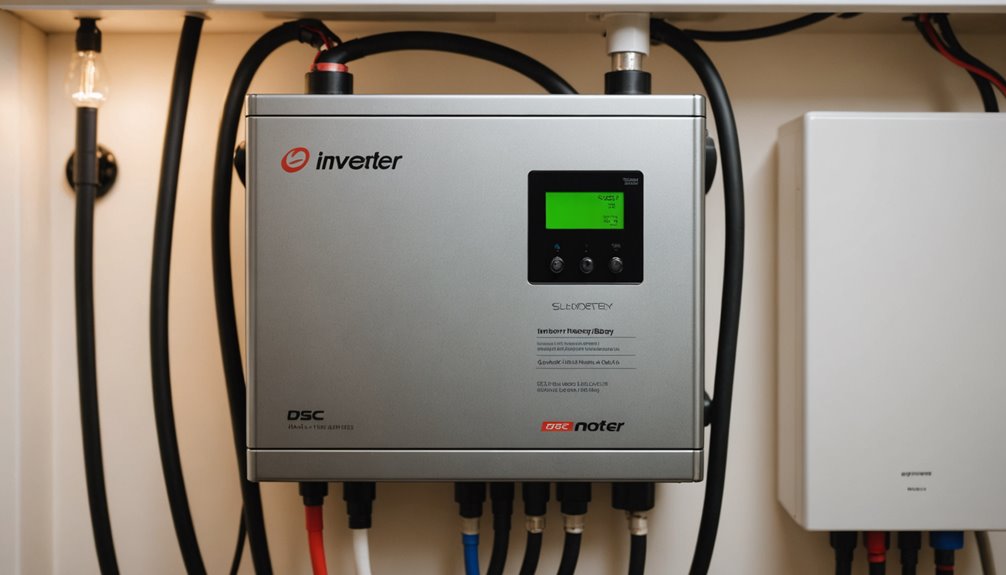
For sensitive or motor-driven appliances such as computers, refrigerators, and air conditioning units, pure sine wave inverters are the appropriate choice. These inverters produce output that closely replicates grid-supplied electricity, reducing the risk of damage to electronics and ensuring stable motor operation.
When sizing an inverter, the VA rating must account for the actual wattage of connected devices, including a margin for inductive loads that draw higher startup current. Battery compatibility is also a relevant consideration, particularly when lithium-ion battery banks are in use, as not all inverters support their charge and discharge characteristics.
If a solar power system is part of the setup, inverter selection should factor in compatibility with charge controllers and overall system architecture. Selecting a properly rated inverter from the outset reduces the likelihood of equipment failure or the need for premature replacement as household energy consumption increases over time.
Lead-Acid vs Lithium-Ion: The Battery Decision That Matters
Lead-acid and lithium-ion batteries represent the two primary options for backup power systems, each with distinct technical characteristics that suit different use cases.
Lead-acid batteries offer a lower initial cost and can handle high surge loads effectively. However, they are limited to approximately 50% depth of discharge to avoid reducing their lifespan, and they require periodic maintenance, including electrolyte level checks and terminal cleaning.
Lithium-ion batteries carry a higher upfront cost but offer measurable performance advantages. They support 80–100% depth of discharge, charge at roughly twice the rate of lead-acid batteries, and provide a significantly longer cycle life, often lasting up to six times as many charge-discharge cycles under comparable conditions.
From a cost-per-cycle perspective, lithium-ion batteries tend to be more economical over time despite the higher purchase price. When paired with an inverter, their higher efficiency also reduces energy loss during charging and discharging.
The appropriate choice depends on specific factors: available budget, tolerance for ongoing maintenance, required depth of discharge, and the expected duration of use. For short-term or low-frequency applications, lead-acid may be sufficient. For systems intended for regular or long-term use, lithium-ion generally offers better overall value based on performance and longevity data.
How to Match Your Inverter VA Rating to Battery Capacity
Matching an inverter’s VA rating to battery capacity requires calculating total load and verifying that the battery can sustain it for the required duration. Begin by summing the wattage of all connected appliances. Divide that total by 0.8 to determine the minimum inverter VA rating needed, accounting for the standard power factor applied to resistive and mixed loads.
Battery capacity must then be assessed in relation to that load. A 200Ah battery at 12V holds approximately 2,400Wh of theoretical energy. At a 350W draw, and applying a standard usable capacity factor of around 50% for lead-acid batteries or up to 80–90% for lithium-based chemistries, the actual runtime will differ from theoretical maximums. For a lead-acid 200Ah, 12V battery, usable energy is closer to 1,200Wh, which supports a 350W load for approximately 3.4 hours rather than the often-cited 6.8 hours that assumes full depth of discharge.
Inverter efficiency, generally ranging from 85% to 95% depending on the unit and load level, further reduces effective output. A stated 1,000W inverter operating at 90% efficiency delivers approximately 900W of usable power, which must be reflected in load calculations.
Wave output type is also a relevant specification. Pure sine wave inverters are compatible with a broader range of appliances and battery management systems. Modified sine wave units may cause compatibility issues with certain sensitive electronics and some battery charger configurations, potentially affecting both equipment longevity and charging accuracy.
Safety Features Worth Checking Before You Buy
Safety features are a critical consideration when selecting an inverter or inverter battery. Short circuit protection limits damage during electrical faults by interrupting current flow before it reaches harmful levels. Overload protection monitors the load on the system and initiates shutdown when demand exceeds safe operating thresholds, reducing the risk of equipment failure or fire. Deep discharge protection maintains battery voltage above a defined minimum, which helps preserve battery capacity and extend service life. Surge protection addresses transient voltage spikes that can degrade or permanently damage connected electronics. Thermal protection, particularly in dual-sensor models, tracks heat levels across multiple points in the unit and triggers shutdown when temperatures exceed safe limits. Each of these features serves a distinct protective function, and their presence or absence directly affects both the operational reliability and the safety profile of the inverter system.
The Best Inverter and Battery Combos by Home Size
Selecting the right inverter and battery combination depends on the power consumption requirements of your home. For small homes with moderate energy demands, a 900VA inverter paired with a 100Ah lithium battery typically provides adequate backup capacity. Medium-sized homes generally require tubular batteries in the 150–200Ah range, which offer longer discharge cycles and are better suited to sustained loads. Homes with total power demands exceeding 2000W may require multiple inverter and battery units to maintain consistent power supply during outages.
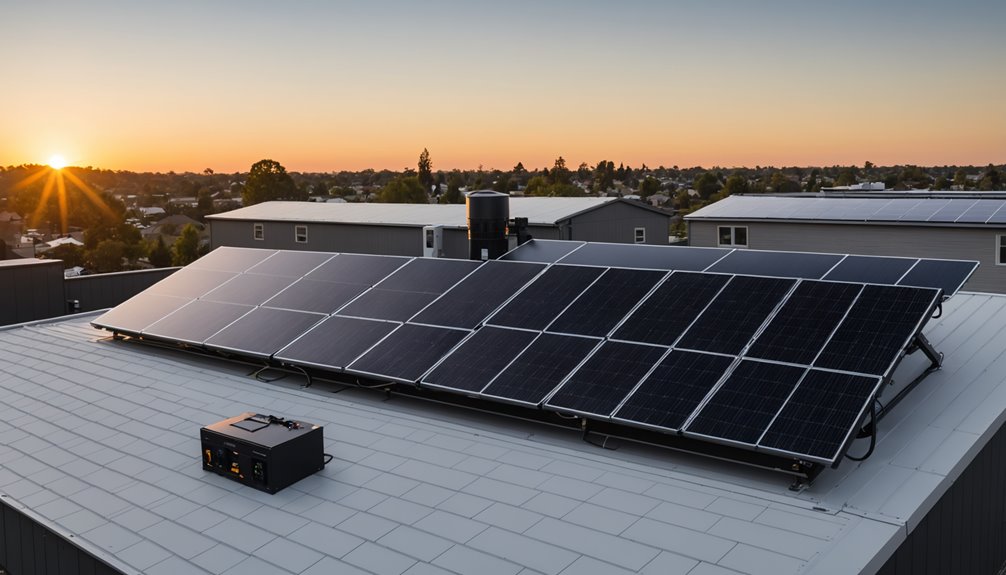
Battery lifespan and overall system efficiency can be improved by integrating solar panels into the setup. Solar input reduces reliance on grid charging, which in turn decreases the frequency and depth of battery discharge cycles. This contributes to longer battery life and lower electricity costs over time. When selecting components, it is advisable to match the inverter’s capacity to the actual load requirements of the home rather than estimating broadly, as oversizing or undersizing the system affects both performance and cost-effectiveness.
Sizing Mistakes That Cut Backup Time and Strain Equipment
Sizing errors represent a significant source of performance problems and premature equipment failure in backup power systems. An undersized inverter will trip repeatedly when loads reach their peak draw, interrupting power delivery at critical moments. Selecting a battery with insufficient capacity reduces available backup duration in direct proportion to the capacity shortfall.
Surge power demands require specific attention during the planning phase. Many motor-driven appliances, including refrigerators, air conditioners, and pumps, draw two to three times their rated running wattage during startup. Failing to account for this transient demand can cause system instability even when the continuous load appears manageable.
A mismatch between an inverter’s VA rating and a battery’s discharge rate creates measurable inefficiency in both components. Operating either component outside its intended parameters accelerates degradation and can shorten service life considerably.
Standard engineering practice recommends sizing backup systems at a minimum of 20% above calculated load requirements. This margin accommodates load growth, accounts for component inefficiencies that develop over time, and reduces the likelihood of operating components at their rated limits continuously. The cost of building in this margin at the initial installation stage is consistently lower than the cost of replacing undersized components after failure.
Conclusion
Selecting an appropriate inverter and battery combination requires evaluating several technical factors, including load calculations, inverter type compatibility, and battery chemistry. Safety specifications and accurate sizing are also critical considerations that directly affect system performance and cost-efficiency. Applying these criteria systematically will support a well-informed purchasing decision and ensure reliable backup power during grid outages.